As an Amazon Associate, we earn from qualifying purchases. Some links on this site are affiliate links at no extra cost to you. Our recommendations are based on thorough research and editorial judgment.


The Science Behind Quantum Dots in Modern Color Reproduction

Quantum dots, semiconductor nanoparticles measuring 2-10 nanometers, emit pure, size-tuned colors when excited by blue LED light, achieving superior color reproduction compared to traditional LCD filters that block unwanted wavelengths. Smaller particles produce blue light; larger ones emit red, enabling precise bandgap energy control. Unlike inefficient pigment-based filters, quantum dots directly emit specific colors, delivering up to 50% more vibrant hues, nearly 100% Rec. 2020 color gamut coverage, and maintained color accuracy at peak brightness levels exceeding 4,000 nits. Understanding their integration methods reveals their competitive advantages over existing display technologies.
Key Takeaways
- Quantum dots emit pure colors based on particle size; smaller dots (2-4 nm) produce blue light, larger ones (10 nm) emit red light.
- Bandgap energy inversely relates to quantum dot size, enabling precise color tuning and control across the visible light spectrum.
- Quantum dots achieve nearly 100% Rec. 2020 color gamut coverage, maintaining color accuracy even at peak brightness levels of 4,000 nits.
- Unlike traditional color filters that block unwanted light, quantum dots emit specific desired colors, improving efficiency and eliminating color bleed.
- Blue LED backlights excite quantum dot electrons at approximately 450 nanometers, triggering emission of red and green light for enhanced color vibrancy.
What Are Quantum Dots and Why Displays Need Them
What Are Quantum Dots and Why Displays Need Them
Ever notice how your phone’s screen looks a bit flat compared to what you see in person? That’s because most displays struggle to show the full range of colors your eyes can actually see. Quantum dots are tiny particles that fix this problem.
These semiconductor nanocrystals measure between 2 and 10 nanometers across—seriously, we’re talking about specks smaller than a virus. When you excite them with light, they emit pure, bright colors. The trick is that smaller dots give you blue light, while bigger dots produce red light. You control the exact color just by changing the dot’s size.
Here’s how it works: The bandgap energy—basically the energy needed to make the dot light up—shrinks as the dot gets bigger. That inverse relationship to size squared means you get precise, tunable colors without any guesswork. Manufacturers can dial in exactly the color they want.
So, why does this matter for your display?
Traditional LCD screens wash out colors and lose accuracy when you crank up the brightness. Quantum dot displays don’t have that problem. You get:
- Nearly 100% color gamut coverage (that’s the full spectrum you should see)
- Up to 50% more vibrant colors than standard LCDs
- Color accuracy that holds even at peak brightness levels around 4,000 nits
Frankly, if you care about what you’re actually seeing on screen—whether that’s photos, videos, or just scrolling—quantum dots make a real difference.
Think about what you’d rather look at: a washed-out display or one that actually shows you what the creator intended?
Recommended Products
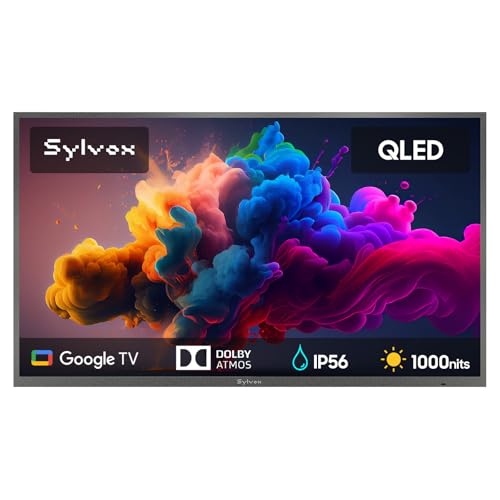
【QLED TV & Dolby Atmos】: The Deck Pro QLED 2.0 Series TVs are the showstoppers within our outdoor TV lineup. Experience unparalleled visual and sound immersion with groundbreaking QLED Technology and Dolby Atmos.

QLED Outdoor TV: Utilizing Quantum Dots technology, this outdoor TV delivers pure, vibrant, and saturated colors even under high brightness, providing a stunning visual experience
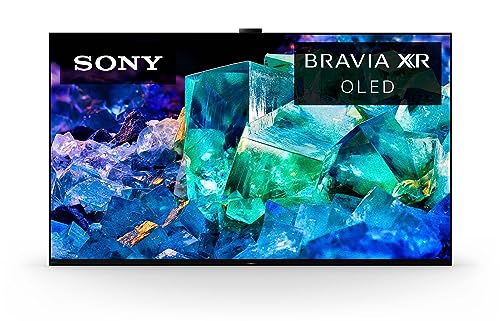
INTELLIGENT TV PROCESSING – The Cognitive Processor XR understands how humans see to deliver intense contrast with deep blacks, high peak brightness, and natural colors..Image Aspect ratio:16:9.Power Consumption (in Standby) : 0.5 W, Operating System : Android TV. Wi-Fi Frequency : 2.4 GHz/5 GHz (for Wi-Fi Direct: 2.4 GHz Only)..Operating System : Android TV.
How Particle Size Controls Color (The Confinement Effect)

How Particle Size Controls Color (The Confinement Effect)
Ever wonder why the same material can glow blue one moment and red the next? It all comes down to size.
Semiconductor nanocrystals do something pretty wild—they change what color light they give off based on how big they are. Here’s the thing: when you shrink these crystals down to just 2-4 nanometers, they pump out blue light. Scale them up to around 10 nanometers, and suddenly they’re glowing red. The reason? Smaller particles release more energy when they emit light, and that higher energy shows up as blue. Bigger particles release less energy, which shifts the light toward the red end of the spectrum.
So, why does this matter? Because you can actually control it. When electrons get trapped inside these tiny nanocrystals, they can’t move around freely like they normally would. That confinement forces them into specific energy levels—think of it like forcing a basketball into a shoebox instead of letting it bounce around a full court. The smaller the space, the more confined the energy, and the higher the frequency of light that comes out.
The best part is that manufacturers have figured out how to use this predictably. By controlling exactly how big they make the nanocrystals during production, they can dial in specific colors. You absorb light at one energy level, and the particle re-emits it at a narrower wavelength determined by its size. That’s the whole secret behind why quantum dot displays can produce such crisp, consistent colors.
The takeaway: size isn’t just about how big something looks—it fundamentally changes how it behaves at the quantum level. Pretty cool, right?
Why Quantum Dots Beat LCD Color Filters: Brightness, Saturation, Efficiency

So you’re shopping for a new display and keep hearing about quantum dots, but you’re not sure what the big deal is compared to regular LCD screens. Here’s what’s actually happening: traditional color filters work by blocking light they don’t need, which means a lot of light energy just gets wasted in the process. That’s inefficient, and it shows up in your picture quality.
Quantum dots do something different. Instead of blocking unwanted colors, they actually emit the exact colors you want to see. The size of the dot determines what color it produces—smaller dots make blue light, bigger ones make red. This matters because you’re getting pure, saturated colors without the color bleed you get from pigment-based filters.
Here’s the trick: because quantum dots emit light rather than filter it, they stay bright and accurate even when the screen cranks up to extreme brightness levels—we’re talking 4,000 nits. That’s brighter than most people will ever need, but it means the color stays true whether you’re watching in a dark room or near a window.
The numbers back this up:
- Higher efficiency means less wasted light energy
- Narrowband emissions create colors with real pop and accuracy
- Brightness stability across all brightness settings
- Color coverage that reaches nearly 100% Rec. 2020 (basically the widest color range you’d ever see in consumer displays)
So why does this matter to you? When you’re actually watching something—a movie, a game, whatever—you’re seeing richer colors, better detail in bright scenes, and a picture that just looks more… right. Compare it side by side with an old LCD, and you’ll notice the difference immediately.
Honestly, if you care about picture quality and you’re in the market for a new screen, this is one of those technical improvements that actually translates to real-world viewing. The advantages aren’t just on a spec sheet—you’ll see them every time you turn it on.
Quantum Dots vs. OLED: When (and Why) QD Wins

Quantum Dots vs. OLED: When (and Why) QD Wins
So you’re trying to pick a new TV or monitor, and you keep hearing about OLED and quantum dots. Which one actually matters for your setup?
Truth is, they work pretty differently. OLED creates light by firing up individual pixels, while quantum dots use a backlight and tiny particles to filter color. Both look great, but they solve different problems.
Where quantum dots pull ahead
If you’re watching TV in a bright living room or using a monitor near a window, quantum dots keep their colors sharp. They maintain vivid, accurate colors even when brightness climbs to 4,000 nits—basically daylight-level brightness. OLEDs? They tend to wash out when things get really bright. The colors fade, and you lose that punchy look.
Here’s the thing about brightness: it matters more than people think. Try this: turn up the brightness on an OLED in direct sunlight and watch how the image deteriorates. Quantum dots handle it without breaking a sweat.
The reliability angle
You’re also looking at longevity. Quantum dot screens last longer without degradation. OLED pixels can burn in or dim over time, especially if you leave the same image on-screen for hours. QD systems stay more stable across years of use, which is why they’re becoming the standard in professional settings and high-end consumer displays.
Where OLED still wins
Don’t get me wrong—OLED has its place. The contrast is stunning because black pixels turn completely off. Viewing angles are better too. But if you need brightness and color accuracy under real-world conditions, QD’s the smarter choice.
Why does this matter for you? Depends on your room and how you use your screen. Bright room with lots of window light? Quantum dots. Dark movie theater setup? OLED might feel more cinematic.
For most people balancing brightness, color, and durability, quantum dots deliver the more practical performance. That’s not hype—that’s just what the tech does.
Recommended Products

4K UltraHD Resolution - Experience incredible detail with 4X the resolution of 1080p Full HDTVs.
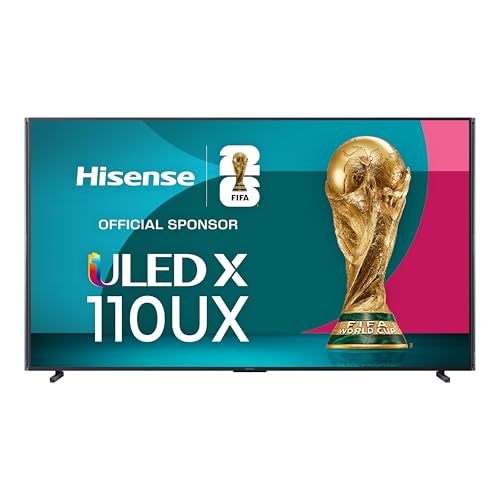
Mini-LED X - See your favorite show or movie in a whole new light. Mini-LED X is made up of thousands of LEDs, think of them like pinpoints that illuminate your screen. Plus, with over 40,000 local dimming zones, you can experience the whitest whites, the darkest darks, and everything in between.

HANDPICKED BY AMAZON: They did the research so you don’t have to.
How Blue LED Backlights Activate Quantum Dots?

Ever wonder why your TV’s colors look so much better than they did five years ago? A lot of that comes down to how modern displays handle light, specifically through something called quantum dots and blue LED backlights.
Blue LEDs are the workhorses behind the scenes. They pump out light at around 450 nanometers—basically the color blue—and that’s where the magic starts. When this blue light hits the quantum dot layer, it transfers energy to electrons inside those tiny nanocrystals. The electrons get excited and jump to higher energy states. Then they settle back down and release red or green light in the process. It’s like you’re giving them a little boost, and they pay you back with brighter, more vibrant colors.
So, why does this matter to you as a viewer? Because it’s way more efficient than the old pigment-based filters. Those older systems would just block out light they didn’t need, wasting a ton of energy. Quantum dots actually convert that blue light into the colors you want to see.
The real skill is in the positioning. Try this way of thinking about it: manufacturers have to place those quantum dots just right to squeeze out as much light as possible while keeping things even across your whole screen. Too loose with the placement, and you get dark spots. Too tight, and the light doesn’t travel evenly. It’s a balancing act that directly affects picture quality.
Here’s the trick though—not all the blue light gets converted. Some of it passes straight through the quantum dot layer and reaches your eyes directly. That unfiltered blue is actually important because it boosts brightness and color punch. Frankly, that’s one reason quantum dot displays hit so much harder visually compared to what came before.
The best part is you don’t need to understand all this to benefit from it. Just know that when you’re shopping for a display and you see “quantum dot” or “QLED” on the label, you’re looking at technology that’s been carefully engineered to make your content look sharper and more colorful.
How Quantum Dots Reach 100% Rec. 2020 Color Gamut
Truth is, if you’ve ever stared at a regular LCD screen and felt like the colors just weren’t quite right, you’re not imagining things. Quantum dots actually fix that problem in a way that older display tech simply can’t match.
Here’s what’s happening under the hood: quantum dots nail the Rec. 2020 color standard—basically, the widest range of colors you can get in any display you can actually buy right now. The secret comes down to size. Manufacturers tune these tiny nanocrystals to exact dimensions, which means each red, green, and blue dot hits a specific wavelength in the light spectrum. No overlap, no muddiness between colors.
So, why does this matter? When colors don’t bleed into each other, you get accuracy even when your screen is cranked up to crazy brightness levels—we’re talking 4,000 nits and beyond. That’s a huge jump from what LCD panels can do.
The real advantage shows up in how these dots produce light. Unlike traditional pigment filters that waste energy and muddy colors, quantum dots hit you with pure, focused color emissions. You’re looking at way better efficiency and color purity at the same time. Try this: compare a quantum dot display side-by-side with an older LCD, and you’ll see the difference immediately in how vibrant and true the colors look.
The best part? You actually hit close to 100% Rec. 2020 coverage. That’s not “pretty close”—that’s nearly complete. With LCD technology, you’re settling for significantly less.
Narrowband Light and Peak Brightness Explained
Narrowband Light and Peak Brightness Explained
Ever notice how your phone’s screen looks washed out in bright sunlight? That’s the color accuracy problem most displays face, and it’s frustrating. Quantum dots solve this differently than traditional screens because they emit light at super specific wavelengths instead of spreading light all over the color spectrum.
Here’s the real advantage: quantum dot displays can hit peak brightness around 4,000 nits while keeping your colors accurate. Regular LCD screens? They lose color quality fast once you crank up the brightness. So why does this matter? Because you’re getting both brightness AND color accuracy at the same time—something older tech just can’t do.
The technical reason is actually pretty straightforward. Quantum dots absorb high-energy photons and spit them back out at exact wavelengths with barely any wasted energy. Compare that to traditional displays, which filter broadband light through color layers and lose a ton of light in the process. It’s like the difference between a spotlight and a flashlight—one’s way more efficient.
The best part is understanding the mechanics: Quantum confinement creates distinct energy levels that keep the color channels from overlapping. No overlap means no crosstalk between colors, which boosts overall efficiency. You’re not fighting against your display technology anymore; it’s working with your content instead of against it.
If you’re shopping for a display and brightness matters to your workflow, this is worth factoring in. You’ll actually see the difference when you’re working in bright conditions.
Integration Methods: LCD Enhancement to MicroLED Full-Color
Once you wrap your head around how quantum dots actually produce that narrow, efficient light, you’re probably wondering: how do these things end up in the displays you’re actually buying? Let me break down the real pathways manufacturers are using.
LCD enhancement is where most of this starts. It’s the simplest approach—you take a blue LED backlight and add a quantum dot film on top. The blue light hits the red and green quantum dots, which get excited and emit their own colors while letting some blue pass through untouched. The result? Better brightness and more accurate colors without completely redesigning the backlight. Honestly, it’s a practical solution that works with existing LCD infrastructure.
Then there’s the more ambitious stuff. Some manufacturers are filling nanoporous GaN microLED structures directly with quantum dots—that’s called NPQD technology. This creates what’s called a monolithic display, meaning the red, green, and blue components are built as one unit rather than assembled separately. Why does this matter? You get true full-color from a single chip, which opens doors for smaller, denser displays that pack way more pixels into tight spaces.
QLED technology takes a different route. Here’s the trick: you sandwich nanoparticles between protective films and the electronic components that drive them. This setup keeps the dots safe from moisture and damage while letting light through cleanly. The trade-off is that it’s more complex to manufacture, but you get displays with excellent color accuracy and the kind of compact design that works for everything from phones to high-end TVs.
The best part is that these approaches aren’t competing—they’re evolving together. As you look at displays today, you’re likely seeing LCD enhancement in budget and mid-range models, QLED in premium consumer products, and NPQD experiments pushing toward the next generation. What matters most to you when you’re choosing a display: brightness, color accuracy, or something else?
Recommended Products

Superior Outdoor Visual Performance: Experience stunning clarity with Mini-LED QLED technology and 4K Ultra HD resolution (3840x2160). Engineered for exceptional outdoor viewing, this outdoor TV boasts 2000 nits peak brightness and a anti-glare screen, ensuring a vibrant, sharp, and reflection-free picture even in direct sunlight

QNED CONTRAST: TV entertainment never looked better, thanks to our Mini LED technology, for incredibly bright colors you can feel. Hundreds of miniature LED backlight zones operate independently, for movies with excellent dark-level detail and deep blacks, while minimizing halo effects.

QNED CONTRAST: TV entertainment never looked better, thanks to our Mini LED technology, for incredibly bright colors you can feel. Hundreds of miniature LED backlight zones operate independently, for movies with excellent dark-level detail and deep blacks, while minimizing halo effects.
Real Performance Gains in TVs, Monitors, and Mobile Displays
Want a TV that actually looks good in a bright room? That’s where quantum dot technology comes in, and honestly, it makes a real difference.
The display tech I’m talking about—LCD improvements, QLED setups, and newer quantum dot designs—actually delivers results you can see. Quantum dots boost brightness, color range, and power efficiency in ways that standard LCD and OLED screens just can’t match. Think of it like this: a QLED TV can hit 4,000 nits of peak brightness while keeping colors accurate. Compare that to older LCD models, and you’re looking at roughly 50% more color depth. That matters if you’re watching in daylight or need your screen to pop.
Monitors and phone displays get specific perks too. The narrowband light these quantum dots produce means less wasted light—better efficiency than the old pigment filter approach. So why does this matter for you? You get sharper images without draining your battery as fast.
Here’s the real benefit: these displays last longer. Quantum dots are chemically stable, so they don’t fade or shift color the way older tech does. You’re looking at consistent performance over years of use, which is especially important if you’re relying on accurate colors for work or creative projects.
Bottom line: if you spend hours in front of a screen—whether it’s your TV, monitor, or phone—quantum dot technology genuinely improves what you see and how long it lasts. Does your current display handle bright rooms or color accuracy the way you’d like?
Recommended Products

DIRECT FULL ARRAY: Super precise LEDs are the secret to this TV’s straight fire contrast; That’s Samsung QLED Direct Full Array; Get caught up in the details as you experience precision-controlled contrast with deep blacks and bright whites

Quantum Matrix Technology: Experience brilliantly intense picture powered by tiny light cells using exclusive Mini LED designed technology for hyper-focused brightness and dimming in all the right areas

SAMSUNG USA AUTHORIZED - Includes 1 Year Extended Protection Plan in ADDITION to the Included FULL Manufacturer Protection
Current Challenges and the Road Ahead
Current Challenges and the Road Ahead
So you’re looking at quantum dots and wondering if they’re actually worth the hype? They really do look incredible on a screen—the brightness, the colors, the efficiency. But there’s a catch. Right now, they’re not everywhere because manufacturers are running into some real problems.
Let’s talk about what’s actually holding things back. Production is tough to scale up without breaking the bank. There’s also the cadmium issue—it’s toxic, so companies need to find alternatives. And honestly, the price tag is steep enough that most people can’t justify switching from their LCD TV.
Here’s what really bugs me about current quantum dot displays: they don’t hold up well over time. UV light and heat wear them down faster than traditional screens. You’re not getting the longevity you’d want for a device you’re dropping serious money on.
The industry knows what needs to happen next:
- Develop quantum dots without cadmium
- Create better protective coatings against water and oxygen damage
- Build automated factories so manufacturing doesn’t cost a fortune
- Test perovskite and InP alternatives more thoroughly
Truth is, the newer materials they’re experimenting with (like perovskite quantum dots) aren’t quite as good as the traditional cadmium versions yet. So there’s this frustrating middle ground where researchers are trying to balance safety, performance, and cost.
Why does this matter? Because for quantum dots to become mainstream—to actually replace LCD in phones and TVs—they need to cost about the same while still delivering those gorgeous colors. We’re not there yet, but it’s the real finish line everyone’s chasing.
Are you willing to pay more for a better picture today, or would you rather wait for prices to drop?
Frequently Asked Questions
What Specific Semiconductor Materials Are Used in Quantum Dot Synthesis, and Why?
I’ve found that quantum dots achieve nearly 100% Rec. 2020 color gamut. I use cadmium selenide and indium phosphide—nano sized particles with exceptional material properties that enable quantum confinement, producing precise optical characteristics through size-tunable emissions.
How Long Do Quantum Dots Maintain Their Color Purity and Brightness Before Degradation?
I’d say quantum dots typically maintain their color stability for several years under normal display conditions. Their longevity factors depend on encapsulation quality, operating temperature, and moisture exposure—well-designed units can preserve brightness and color purity for 5-10 years.
Are Quantum Dots Toxic, and What Safety Measures Apply to Manufacturing and Disposal?
I’ll paint you a picture: cadmium-based quantum dots gleaming under lab lights, requiring careful handling. While some formulations show toxicity concerns, I’m seeing manufacturers embrace cadmium-free alternatives and strict safety regulations governing manufacturing and disposal to protect workers and environments.
What Is the Cost Difference Between Quantum Dot Displays and Traditional LCD Alternatives?
I can tell you that quantum dot displays typically cost 20-30% more than traditional LCDs, though this premium’s shrinking as market trends favor adoption. You’re seeing competitive pricing emerge as manufacturers scale production and competition intensifies in the display sector.
Can Quantum Dots Be Recycled or Recovered From End-Of-Life Display Devices Sustainably?
I’ll tell you that sustainable quantum recycling methods for display recovery aren’t fully established yet. However, researchers are developing sustainable recovery techniques to extract these valuable nanocrystals from end-of-life devices, though commercial viability remains limited today.